From Munich to Asia: How Irubis is Transforming Bioprocessing Through Global Expansion
Irubis leveraged the German Accelerator to expand into Asia, successfully building vital local partnerships, understanding regional business dynamics in Korea, and refining their communication strategy. While maintaining a strong global footprint across Europe, the U.S., China, and Japan, the startup remains disciplined, focusing on core regions to ensure sustainable and strategic long-term international growth.

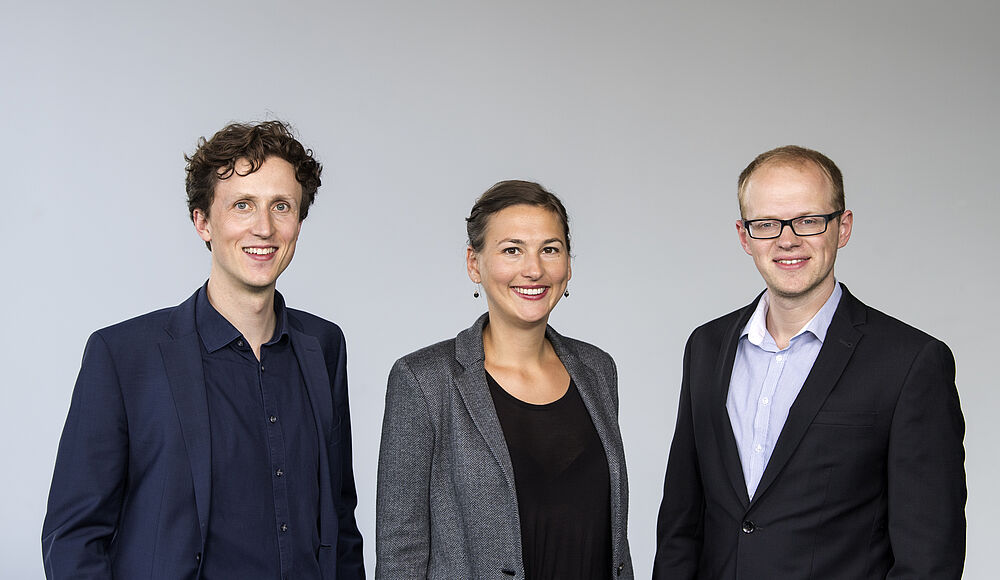
Founded in Munich, Irubis is helping reshape the future of biopharmaceutical manufacturing through innovative sensor technology. By enabling real-time monitoring directly inside bioprocesses, the company is making drug production more efficient, automated, and ultimately more accessible. For founder Alexander Geißler, entrepreneurship was never just about building a company, it was about building solutions with real-world impact.
Irubis develops inline analytical sensors that allow manufacturers to monitor bioprocesses without interrupting production. Unlike conventional methods that require samples to be removed and analyzed externally, Irubis' technology continuously measures what's happening inside the process itself. This enables automated control systems that improve production efficiency while reducing costs.
The mission is clear: make life-saving biopharmaceuticals, from cancer treatments to diabetes medications, more affordable by enabling smarter manufacturing.
Looking Beyond Europe
International growth wasn't part of Irubis original roadmap, but circumstances quickly changed. During the COVID-19 pandemic, travel restrictions prevented the team from accessing laboratories, even those located just a few kilometers from their Munich headquarters. Suddenly, geographical proximity no longer mattered.
"We realized that if we couldn't visit a lab in Munich, it didn't make much difference whether the customer was in Germany or in the United States," Alexander recalls. The company began reaching out to customers in the U.S., where early adopters proved more willing to embrace new technologies. Initial success quickly validated the decision, and once travel restrictions eased, Irubis expanded its international presence further. At the same time, the team recognized Asia as another critical growth market.
From a business perspective, the reasoning was straightforward. While Europe's biopharmaceutical market remains important, much of the industry's future growth is happening in Asia. With significant investments in biotechnology and pharmaceutical manufacturing across the region, expanding into Asian markets became a natural next step.
Entering Asia with German Accelerator
After participating in the German Accelerator program for the U.S., Irubis joined the Asia program with a clear objective: strengthen its presence in key Asian markets. The company had already established distribution partners in China and Japan, but Korea remained a missing piece of its regional strategy. Finding the right distributor required far more than identifying potential customers online.
"We wanted to understand the country, understand the business rules, and get exposed to potential partners in Korea," explains Matthias Eggers. German Accelerator provided exactly that through introductions to local experts and industry contacts, the team gained valuable insights into Korea's business landscape and developed relationships with potential distributors and partners.
Building Relationships, Not Just Market Knowledge
One of the biggest lessons during the program was that successful expansion depends on understanding how business is conducted locally. Before joining the program, the team knew which companies operated in Korea's biopharmaceutical ecosystem. What they lacked was an understanding of how decisions were made, who the key stakeholders were, and how distributor networks actually functioned.
"The program helped us understand who the right people are to approach and how the distributor landscape works. At the end of the day, it's about building relationships with the right people."
Equally valuable was the guidance from mentors, who helped the team adapt their communication for the Korean market. Rather than changing the company's strategy, the mentors refined how Irubis presented its technology, highlighting the topics most relevant to Korean customers while avoiding messaging that might be less effective locally.
"The biggest shift wasn't what we wanted to achieve, it was how to approach people and how to communicate with customers in Korea," Matthias explains.
Expanding with Focus
Today, Irubis has established a growing international presence across Europe, the United States, China, and Japan, while actively working to complete its distributor network in Korea.
The company's international roadmap continues with plans to establish a U.S. subsidiary, creating an even stronger foundation for future global growth. Despite opportunities in additional markets, the team remains disciplined. Rather than pursuing rapid expansion everywhere at once, Irubis is focused on strengthening its position in its core regions before exploring new opportunities. For a growing startup, maintaining focus has become just as important as pursuing growth.
Lessons Learned
International Expansion Should Follow Market Logic
For Irubis, internationalization wasn't driven by ambition alone. It was guided by market dynamics, customer demand, and the regions where the biopharmaceutical industry is growing fastest.
Local Relationships Matter More Than Market Research
Understanding an industry from online research is only the first step. Building relationships with the right partners and understanding local business practices is what ultimately opens new markets.
Adapt Your Communication
Every market has its own expectations. Learning how to present your product in a way that resonates with local customers can be just as important as the technology itself.
Stay Focused
While international opportunities are exciting, trying to enter too many markets at once can dilute resources.
For Irubis, concentrating on key markets, including the U.S., China, Japan, and Korea, has created a stronger foundation for sustainable global growth. By combining innovative technology with a thoughtful internationalization strategy, Irubis is demonstrating that solving global healthcare challenges requires both scientific innovation and the ability to build meaningful partnerships across borders.